



White legged noisy hornbill skull
The white legged noisy hornbill, belonging to the hornbill family, hornbill subfamily, and hornbill genus, is distributed in central and southern Africa. The hornbill is a precious and beautiful large bird species, with a beak that accounts for one-third to half of its body length. It has a copper helmet shaped protrusion on its head called the helmet protrusion, which resembles a rhinoceros horn, hence the name hornbill. The body length of hornbills is about 75 centimeters; The back feathers are pure black with a green metallic luster; The wing edge and feather tip are white.

Crow skull
Crow is the common name for several species of black birds in the family Crowidae and genus Crow. Also known as Lao Lu, his mouth is filled with joyful cries. It is the largest bird in the Passeriformes order, with a body length of about 50 centimeters. The whole body or most of the feathers are blackish black, hence the name. Feathers are mostly black or black and white, with long beaks, some with distinct white collars, and black feathers with a purple blue metallic luster; Wings are much longer than tails; The mouth, legs, and feet are pure black. The distance between the nostrils and the forehead is about one-third of the length of the mouth, and the nose must be hard and straight, reaching the middle of the mouth.

Yellow eyed penguin skull
The yellow eyed penguin is a penguin belonging to the bird class, penguin family, and yellow eyed penguin genus. Height is 56-78 centimeters, weight is about 5-8 kilograms. This species exhibits sexual dimorphism, with male birds possessing decorations derived from carotenoids. The difference between males and females can be seen from the pigment deposition on their feathers, with males having a brighter yellow head. The pupils of yellow eyed penguins are light yellow, which is their main characteristic. The body is black, and the jaw and throat are black brown. There is a yellow band connecting the eyes at the back of the head. Residing along the coastline of New Zealand's islands. Most of the coast is covered by coastal forests.

Spoonbill skull
Spoonbill, a collective term for six species of long legged wading birds, is the national bird of the Netherlands. Mainly feeds on small vertebrates and invertebrates such as shrimp, crabs, aquatic insects, insect larvae, worms, crustaceans, mollusks, frogs, tadpoles, lizards, and small fish, occasionally also consuming small amounts of plant-based food. Spoonbills often move in groups, and occasionally there may be individuals moving alone. Resting often spreads out in a straight line by the water's edge. Stand still for a long time, then fly to another place after being startled. Sexual alertness and fear of people, with both wings flapping rapidly during flight, averaging around 186 movements per minute. Flying often takes place in sparse single rows or in wavy diagonal lines.

Seagull skull
Seagulls are a group of seabirds belonging to the gull family in the order Characiformes. Seagull head and neck are white, back and shoulders are slate gray; The waist, tail feathers, and tail feathers are all pure white. The base is gray white or forms larger gray spots on the inner lining. The lower body is pure white. Humans believe that the call of seagulls sounds like "Europe, Europe", and "gull" is a onomatopoeic word that imitates this bird's call, hence the name. Seagulls are mainly distributed in northeastern, southern, and southwestern China, as well as in Europe, the Mediterranean coast, the Black Sea, Caspian Sea, western North America, including Alaska and the eastern Pacific coast, and even near the Tropic of Cancer.

Spotted head wagtail skull
The spotted headed wagtail is an animal belonging to the family Scombridae in the order Scombriformes. The body length of the spotted headed wagtail is about 24 centimeters, belonging to the earless feather tribe. Its body color is brown with light horizontal stripes; The chin is white with one white diagonal line on the shoulder, and the abdomen is white with brown vertical lines; Yellow brown iris; Yellow green mouth, yellow end; The feet are yellow green, and the soles are covered in feathers. The spotted wagtail is distributed in northeastern India and various Southeast Asian countries, while it is found in southern, central, southwestern, and southeastern China. It inhabits forested and agricultural areas in mountainous, hilly, and plain regions. The spotted headed wagtail is nocturnal and usually moves alone or in pairs. It is more active during the day, particularly in the early morning and evening, and can also hunt at night.

Popular Models
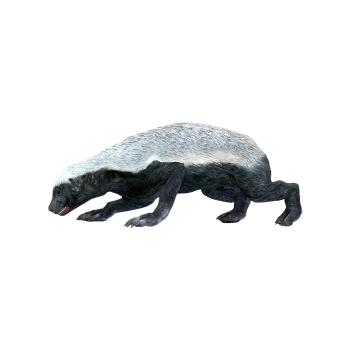
Honey Badger (3D animated model)
194 View
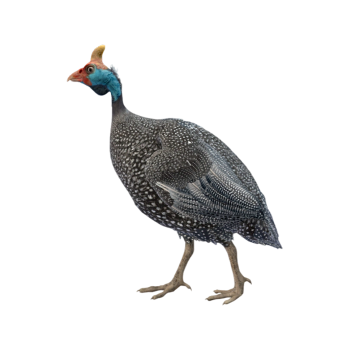
Guinea fowl (3D animated model)
165 View
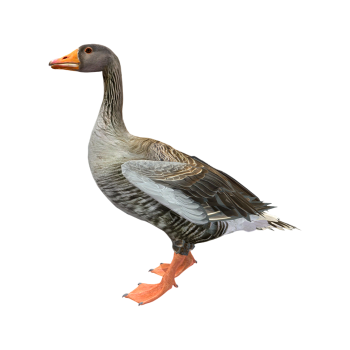
Wild Goose (3D animated model)
187 View
Red Fox (3D animated model)
155 View
Random Model

Autumn and winter warm coat
825 View

Rock 3D model
1237 View

Mount Carmel, Israel
1078 View


Imperial Seal of Ancient China
1075 View

General Francisco Sarwar Masso Cap
673 View


CDPeugeotSP66 racing car 1967 model
1042 View
